


 Home /
 Thin LiPo Battery | Thin Lithium Polymer Battery for Smart Devices


Table of Contents
-
Thin LiPo Battery: Electronics Ultra-Thin Power Solution
- What is a Thin LiPo Battery and Why Does it Matter?
- Behind Thin Lithium Polymer Battery Technology Engineering
- Thin LiPo Battery Uses in Contemporary Electronics
- Why the Thin LiPo Battery is a Game Changer
- Battery Production and Custom Battery Solutions
- Most Important Benefits in Practical Applications
- Battery Architecture Future
- Conclusion:
Thin LiPo Battery: Electronics Ultra-Thin Power Solution
- Compact and efficient energy storage is in demand. Gadgets are becoming smaller, smarter, and more interconnected. The Thin LiPo Battery comes to the rescue here. It is not merely a battery; it is a well-thought-out lithium polymer battery that is so thin it can be installed in the smallest electronics without affecting performance.
- With wearables to IoT systems, the demand for a lightweight LiPo battery with high energy density is more than ever. Here, we discuss technical knowledge, uses, and practical benefits of this ultra-thin LiPo battery technology in a human-friendly manner.
What is a Thin LiPo Battery and Why Does it Matter?
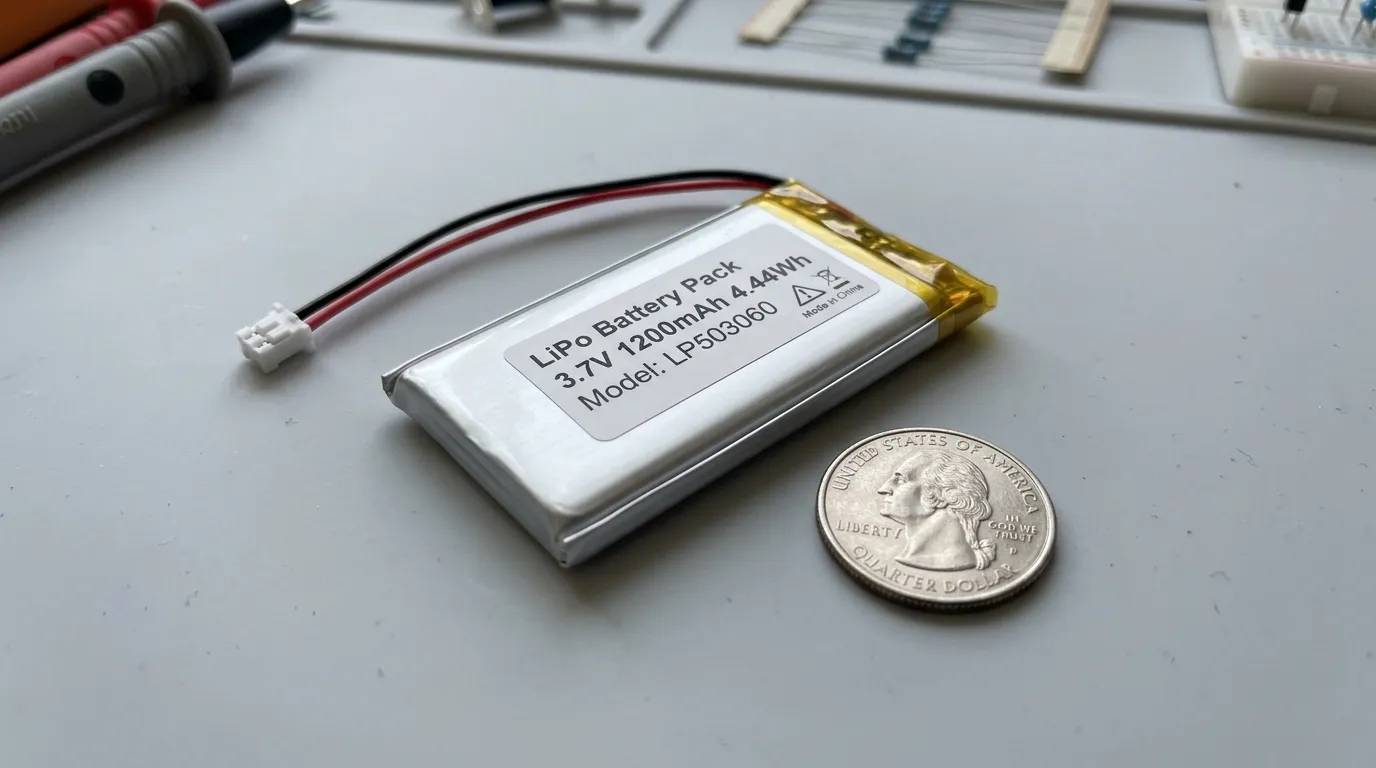
A Thin LiPo battery is a thin, flexible energy storage device that is lithium polymer-based. It has a pouch-type LiPo battery design as opposed to the traditional cylindrical cells, which enables it to be flat and lightweight. This flat LiPo cell design is constructed at its core as an efficient and space-saving design. It finds extensive application in miniature electronics where a millimeter counts.
Key characteristics include:
• Nominal voltage of 3.7V LiPo cell.
• High power density (Wh/kg)
• Flexible and compact structure
• Light lithium battery solution for contemporary devices.
This renders it a favorite slim LiPo battery among engineers and product designers.
Behind Thin Lithium Polymer Battery Technology Engineering
The true power of a thin lithium polymer battery is the internal structure. It employs a polymer electrolyte framework rather than liquid electrolytes, enhancing the safety and flexibility.
Important technical architecture is:
• Layered anode and cathode to maintain constant energy flow.
• Battery architecture to be thin film to reduce thickness.
• High-level battery thickness tolerance control to manufacture precisely.
• Thermal and electrical safety built-in safety protection circuit (PCM/BMS).
All these factors combine to produce a high-energy-density battery cell that can be effective even in small spaces. The discharge rate (C-rate) is another critical aspect that determines the rate at which energy can be provided. Thin LiPo batteries are designed to provide stable performance for low-power and high-drain devices.
Technical Performance and Core Specifications
A new slim rechargeable LiPo battery is not merely a matter of size; it is a matter of equal performance.
Common performance attributes are:
• Nominal voltage: 3.7V LiPo battery standard
• Cycle life: optimized cycle life performance of the battery.
• Energy density: high Wh/kg power with long usage.
• Self-discharge: very low for long standby applications
• Stability: regulated load voltage output.
This combination enables it to be a dependable small rechargeable battery module in sophisticated electronics. The focus is always on delivering a lightweight lithium battery solution that maintains durability and efficiency.
Thin LiPo Battery Uses in Contemporary Electronics
The application of LiPo battery systems is growing at a very high rate in industries. Such batteries have become the foundation of numerous smart devices.
Wearable Devices
• Smartwatches
• Fitness bands
• Health monitoring patches
The LiPo wearable battery is slim and provides comfort and flexibility without increasing the size.
Medical Devices
Small sources of energy are important in medical innovation. A medical device LiPo battery is a thin battery that powers:
• Portable monitors
• Medical wearables
• Diagnostic sensors
It offers a safe and reliable medical wearable battery pack.
IoT Devices
The IoT technology relies on long-term, efficient energy storage.
• IoT sensor battery solution
• Smart home devices
• Industrial monitoring systems
These devices demand a stable IoT sensor battery solution that is low-power-consuming and highly reliable.
GPS and Tracking Systems
Tracking devices need a constant power supply.
• Battery of a GPS tracking device.
• Asset tracking systems
• Fleet monitoring tools
GPS trackers have a thin LiPo battery that guarantees continuous operation in small designs.
Bluetooth and Wireless Devices
• Bluetooth wearable battery
• RFID tracking systems
These systems rely on small-sized batteries, such as a low-profile lithium battery.
Why the Thin LiPo Battery is a Game Changer
Design freedom is the greatest benefit of a flexible lithium polymer cell. The bulky shapes of batteries no longer limit engineers.
Major benefits include:
• Ultra-lightweight structure
• Efficiency of battery cell with high energy density.
• Flexible design for modern electronics
• Constant production of intelligent appliances.
• OEM manufacturing tailor-made.
It is extensively employed as a smart device power supply in industries where both size and performance are important.
Battery Production and Custom Battery Solutions
The industries of today tend to need tailored solutions. Depending on the needs of the device, a micro lithium polymer battery can be developed.
Manufacturing involves:
• Precision electrode layering
• Controlled electrolyte polymerization
• Strict thickness calibration
• Safety circuit integration (PCM/BMS)
• Last testing cycle life and stability.
A thin rechargeable LiPo battery is now more likely to be OEM customized to fit the requirements of a particular product.
Most Important Benefits in Practical Applications
A small rechargeable battery pack offers real-life benefits that transcend specifications.
• Longer device runtime
• Improved portability
• Reduced device weight
• Increased flexibility in product design.
• Secure and reliable energy production.
That is why the industries are quickly moving towards ultra-thin lithium polymer battery systems.
Battery Architecture Future
Miniaturization is the way forward in energy storage. Next-generation electronics are likely to be dominated by thin-film battery architecture.
Trends include:
• Improvements in higher energy density.
• Faster charging capabilities
• Flexible battery designs.
• Less toxic polymer electrolyte systems.
• Incorporation into micro-devices and smart fabrics.
With the advancement of technology, the thin lithium battery solution will be even more vital in day-to-day lives.
Conclusion:
Electronics is a world that is becoming smaller, and performance expectations are increasing. The Thin LiPo Battery is at the heart of this revolution. It provides power in a thin, efficient, and very versatile form. It is powering innovation in wearable technology and industrial IoT systems, and it doesn’t need space or weight.
It is strong in balance, small size, high output, and safety. With the ever-changing technology, this battery will still be a fundamental component of contemporary devices. Gloflux LiPo Battery solutions are the future of powering your future, with innovation and ultra-thin performance.
Talk to the Manufacturer
Resources & Insights

High Capacity Lithium Battery for Wearables: High-Voltage LiPo Cell Design
2026-10-19
Cylindrical Battery Packs for Laptops: 2S vs 3S vs 4S Battery Design
2026-10-19

Stage Lighting Battery Pack: Prevent Voltage Drop & LED Flicker
2026-10-19
Best Rechargeable Batteries for Smart Devices: Performance, Safety, and Selection Guide
2026-10-19


