


 Home /
 MS14490 MS30502 Battery for Dräger Medical Monitors


Table of Contents
- Why Medical Monitor Battery Compatibility Matters
- Li-ion Technology for Medical Monitoring Equipment
- Replacement Battery for Vista, Delta and Gamma XL Monitors
- Battery Protection Is Part of the Pack Design
- What Should Buyers Check Before Ordering?
- OEM and Custom Battery Options
- Applications for MS14490 and MS30502 Replacement Batteries
- Selecting a Reliable Medical Battery Supplier
- Frequently Asked Questions
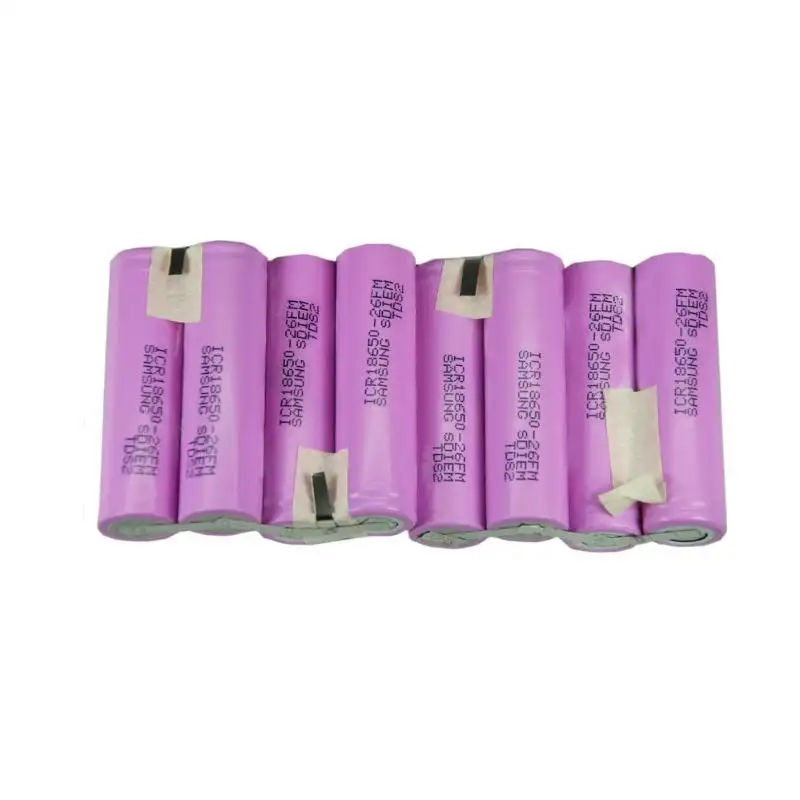
Medical monitors are expected to remain available when clinicians need them, whether the equipment is connected to mains power, moved between departments, or temporarily operated from an internal battery. For this reason, choosing a suitable MS14490 MS30502 battery is not simply a matter of finding a lithium-ion pack with a similar shape. Electrical specifications, connector design, charging requirements, battery protection, and equipment compatibility all need to be considered.
A compatible rechargeable Li-ion battery solution for Dräger Vista, Delta, Gamma XL, and SC 6002XL monitoring equipment can provide portable or backup power for hospitals, clinics, medical equipment service companies, and replacement battery distributors.
Why Medical Monitor Battery Compatibility Matters
Patient monitoring equipment can remain in service for many years, while its rechargeable battery may need replacement during that operating life. Battery aging can gradually reduce usable capacity and shorten the amount of time a monitor can operate away from AC power.
When searching for a replacement, model references such as MS14490 and MS30502 help narrow the selection, but buyers should still verify the complete battery specification.
Two batteries may look similar externally while having different connector pinouts, voltage ranges, charging characteristics, protection circuits, or physical dimensions. Installing a battery based only on appearance or nominal voltage can therefore create compatibility problems.
Before ordering, it is useful to confirm the original battery label, monitor model, connector, battery dimensions, voltage, capacity, and charging requirements.
Li-ion Technology for Medical Monitoring Equipment
Lithium-ion batteries are commonly used in portable electronic equipment because they provide useful energy storage in a relatively compact and lightweight package.
For a medical monitor battery pack, this is particularly valuable. The battery needs to fit within an existing equipment enclosure while providing enough stored energy for temporary portable operation, patient transport, or backup use.
A properly designed Li-ion battery pack combines several elements rather than relying only on the cells themselves. These typically include matched cells, insulation materials, electrical interconnections, temperature sensing, protective circuitry, wiring, connectors, and a mechanical enclosure.
Consistent battery assembly is therefore an important consideration for medical equipment replacement applications.
Replacement Battery for Vista, Delta and Gamma XL Monitors
The MS14490 MS30502 Li-ion battery pack can be developed for compatible Dräger Vista, Delta, Gamma XL, and SC 6002XL medical monitoring systems.
Its purpose is to provide a rechargeable replacement power source when the original battery has reached the end of its useful service life or when equipment maintenance programs require replacement battery inventory.
In hospital environments, a functional internal battery can be important when monitors are moved between patient rooms, transferred between departments, or temporarily disconnected from wall power.
Service organizations may also keep compatible replacement batteries available so older monitoring equipment can continue operating without replacing the entire device solely because the original rechargeable battery has degraded.
Battery Protection Is Part of the Pack Design
A medical equipment battery needs more than energy storage. Protection functions are also an important part of the battery design.
Depending on the final battery configuration, protection may include:
- Overcharge protection
- Over-discharge protection
- Overcurrent protection
- Short-circuit protection
- Abnormal-temperature protection
These functions help manage the battery when operating conditions move outside the intended range.
However, protection parameters must be matched to the actual monitor and charging system. A generic protection board with unsuitable settings may not perform correctly in every medical device.
For this reason, replacement battery development should start with the electrical requirements of the original equipment rather than simply selecting a standard lithium battery module.
What Should Buyers Check Before Ordering?
Before purchasing a Dräger medical monitor replacement battery, several details should be verified.
Start with the battery model number. If the original pack is identified as MS14490 or MS30502, that information should be provided to the battery supplier together with the exact monitor model.
Next, check the original pack's voltage and capacity. Battery dimensions are also important because even a small difference in housing size can prevent correct installation.
The connector requires particular attention. Buyers should verify connector type, wire arrangement, terminal position, and pin definition. If additional sensing or communication connections are present, these should also be identified.
Photos of the original battery label, connector, and battery compartment can often make technical confirmation easier during replacement battery development.
OEM and Custom Battery Options
Replacement battery requirements are not always identical between projects. Medical equipment distributors, repair companies, and device manufacturers may need customized solutions for different markets.
A medical Li-ion battery supplier can potentially customize aspects such as:
- Battery enclosure
- Connector type
- Wiring length
- Terminal configuration
- Protection settings
- Battery labels
- Packaging
- Mechanical structure
For OEM and ODM projects, additional requirements may include specific testing procedures, traceability, documentation, or packaging standards.
Customization is particularly useful when the original battery is difficult to source or when a distributor needs a stable replacement supply for an established base of medical equipment.
Applications for MS14490 and MS30502 Replacement Batteries
The main application of this battery solution is compatible patient monitoring equipment, including selected Vista, Delta, Gamma XL, and SC 6002XL systems.
Typical users may include hospitals replacing batteries during preventive maintenance, biomedical engineering departments servicing monitors, independent medical equipment repair companies, distributors supplying replacement components, and healthcare organizations maintaining older monitoring equipment.
A replacement battery can help extend the useful service period of equipment when the monitor itself remains functional but its original rechargeable battery no longer provides adequate runtime.
Selecting a Reliable Medical Battery Supplier
When sourcing an MS14490 MS30502 battery, buyers should evaluate more than unit price.
A suitable supplier should be able to review the original battery specification, confirm cell configuration, check connector compatibility, control assembly quality, and support sample verification before larger orders.
For custom replacement projects, communication between the equipment owner and battery manufacturer is especially important. Providing accurate model numbers, battery photos, dimensions, electrical requirements, and connector information helps reduce the risk of developing an incompatible pack.
The final goal is straightforward: a replacement battery should fit correctly, communicate or connect as required, charge properly, and provide stable rechargeable power within the intended equipment.
Frequently Asked Questions
1. What equipment is the MS14490 MS30502 battery designed for?
It can be developed as a compatible replacement battery for selected Dräger Vista, Delta, Gamma XL, and SC 6002XL medical monitoring equipment. Exact compatibility should be confirmed before ordering.
2. Is this an original Dräger battery?
It can be supplied as a compatible replacement battery solution rather than being represented as an original OEM battery. Buyers should verify the required model and specification for their equipment.
3. Can I replace a battery based only on the MS14490 or MS30502 number?
The model number is important, but it should not be the only reference. Voltage, capacity, dimensions, connector, pin definition, charging requirements, and monitor model should also be checked.
4. Can the medical monitor battery be customized?
Yes. Depending on the project, connector type, wiring, enclosure, protection configuration, labeling, packaging, and mechanical structure can be customized.
5. Who typically purchases these replacement batteries?
Typical buyers include hospitals, biomedical engineering teams, medical equipment repair centers, distributors, and companies maintaining compatible patient monitoring systems.
Talk to the Manufacturer
Resources & Insights
High Capacity Lithium Battery for Wearables: High-Voltage LiPo Cell Design
2026-10-19
Cylindrical Battery Packs for Laptops: 2S vs 3S vs 4S Battery Design
2026-10-19
Stage Lighting Battery Pack: Prevent Voltage Drop & LED Flicker
2026-10-19

Best Rechargeable Batteries for Smart Devices: Performance, Safety, and Selection Guide
2026-10-19


