


 Home /
 Researchers Develop Strategies to Mitigate Cathode Degradation and Improve Lithium-Ion Battery Performance


Table of Contents
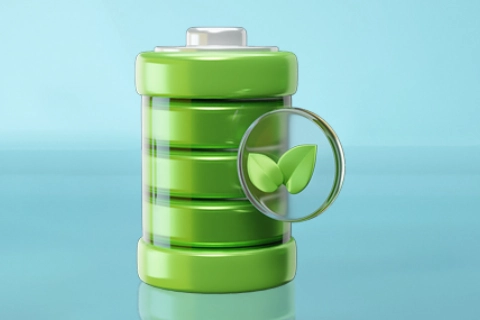
Lithium-ion batteries (LIBs), serving as high-performance power sources for renewable applications such as electric vehicles and consumer electronics, require electrodes that provide high energy density without compromising battery life. According to foreign media reports, researchers from institutions including Northwestern University are exploring the root causes of degradation in high-energy-density LIB battery cathode materials and developing strategies to mitigate degradation mechanisms to improve LIB battery performance.
This research could be valuable for many emerging applications, particularly electric vehicles and grid-scale energy storage applications for renewable energy sources such as wind and solar power.
Researcher Mark Hersam stated, "Most of the degradation mechanisms in LIB batteries occur on the electrode surfaces in contact with the electrolyte. We are trying to understand the chemical reactions that occur on these surfaces and then develop strategies to minimize the degree of degradation."
Key Approach: Purifying NCA Cathode Surfaces
The researchers used surface chemical characteristics to identify and reduce hydroxide and carbonate impurities remaining during the synthesis of NCA (nickel, cobalt, aluminum) nanoparticles. They found that when preparing the LIB cathode surface, it is first necessary to anneal it appropriately, heating the cathode nanoparticles to remove surface impurities, and then locking them into the desired structure through an atomically thin graphene coating.
Performance Advantages of Graphene-Coated Cathodes
In LIB batteries, cathodes made with NCA nanoparticles coated with graphene exhibit excellent electrochemical performance, including low impedance, high rate capability, high volumetric energy and power density, and long cycle life. The graphene coating also acts as a barrier between the electrode surface and the electrolyte, further enhancing battery life.
Researchers initially believed that using the graphene coating alone would be sufficient to improve performance. However, results show that pre-annealing the cathode material to optimize its surface chemistry before applying the graphene coating is crucial.
Currently, this work primarily focuses on nickel-rich LIB cathodes. This method can also be extended to other types of energy storage electrodes, such as sodium-ion or magnesium-ion batteries containing high specific surface area nanostructures, paving the way for the development of high-performance nanoparticle-based energy storage devices.
- PREV: Null
- NEXT: Physicochemical Properties of Lithium-Ion Battery Separators
Talk to the Manufacturer
Resources & Insights
High Capacity Lithium Battery for Wearables: High-Voltage LiPo Cell Design
2026-10-19
Cylindrical Battery Packs for Laptops: 2S vs 3S vs 4S Battery Design
2026-10-19

Stage Lighting Battery Pack: Prevent Voltage Drop & LED Flicker
2026-10-19

Best Rechargeable Batteries for Smart Devices: Performance, Safety, and Selection Guide
2026-10-19


